Light and Optics

Required Book:
“The Secret Lives of Color”; Kassia St. Clair; Penguin; ISBN 978-0143131144
(All Books Can be purchased at Brewster Book Store)
Suggested Books:
- “Color: A Natural History of the Palette”; Victoria Finlay; Vintage/Random House; ISBN 978-0812971422
- “Interaction of Color: 50th Anniversary Edition”; Josef Albers; Yale University Press; ISBN 978-0300179354
- “The Secret Language of Color: Science, Nature, History, Culture, Beauty of Red, Orange, Yellow, Green, Blue, & Violet”; Joann Eckstut & Arielle Eckstut; Black Dog & Leventhal; ISBN 978-1579129491
- The Original Painters Color Diary: Travel, 6”x8”; HG Art Concepts
- Artist’s Color Swatch Book: 7.5”x5”; Tumuarta
Recommended Supplies:
Highly Recommended:
- Journal with watercolor paper (cold press)
- Soft pencil (HB, H, or #2)
- Pencil sharpener
- Technical drawing pen
- Refillable brush pen
- Colored pencils (watercolor pencils work well)
- Watercolor set (Art Toolkit)
Optional:
- Clipboard or hard surface (if journal is softcover)
- Backpack or shoulder bag
- Binder clips
- Small ruler
- Small mixing palette
- Small sponge
- Small rag
- Small water bottle
- Small water spray bottle
- Small syringe (no needle)
- White gel pen
- Color wheel
January 12, 2026 – 10:00 - 12:00 am – Light and Optics – Brewster Book Store
Description: Light is the foundation of everything we see, paint, and record in our nature journals. In this hands-on workshop session, participants explore how light behaves and how it shapes the colors, values, and moods we observe in the natural world. Designed for adult learners interested in watercolor and nature journaling, this session blends accessible science with creative practice to strengthen both observation and artistic decision-making.
We’ll begin by looking at how different qualities of light—direction, intensity, and color temperature—affect the appearance of objects. Participants will explore why morning and evening light feels warmer, why colors shift in shade versus sunlight, and how reflection and transparency influence what we perceive. Simple optics concepts are introduced in clear, intuitive ways, always connected back to what you see outdoors.
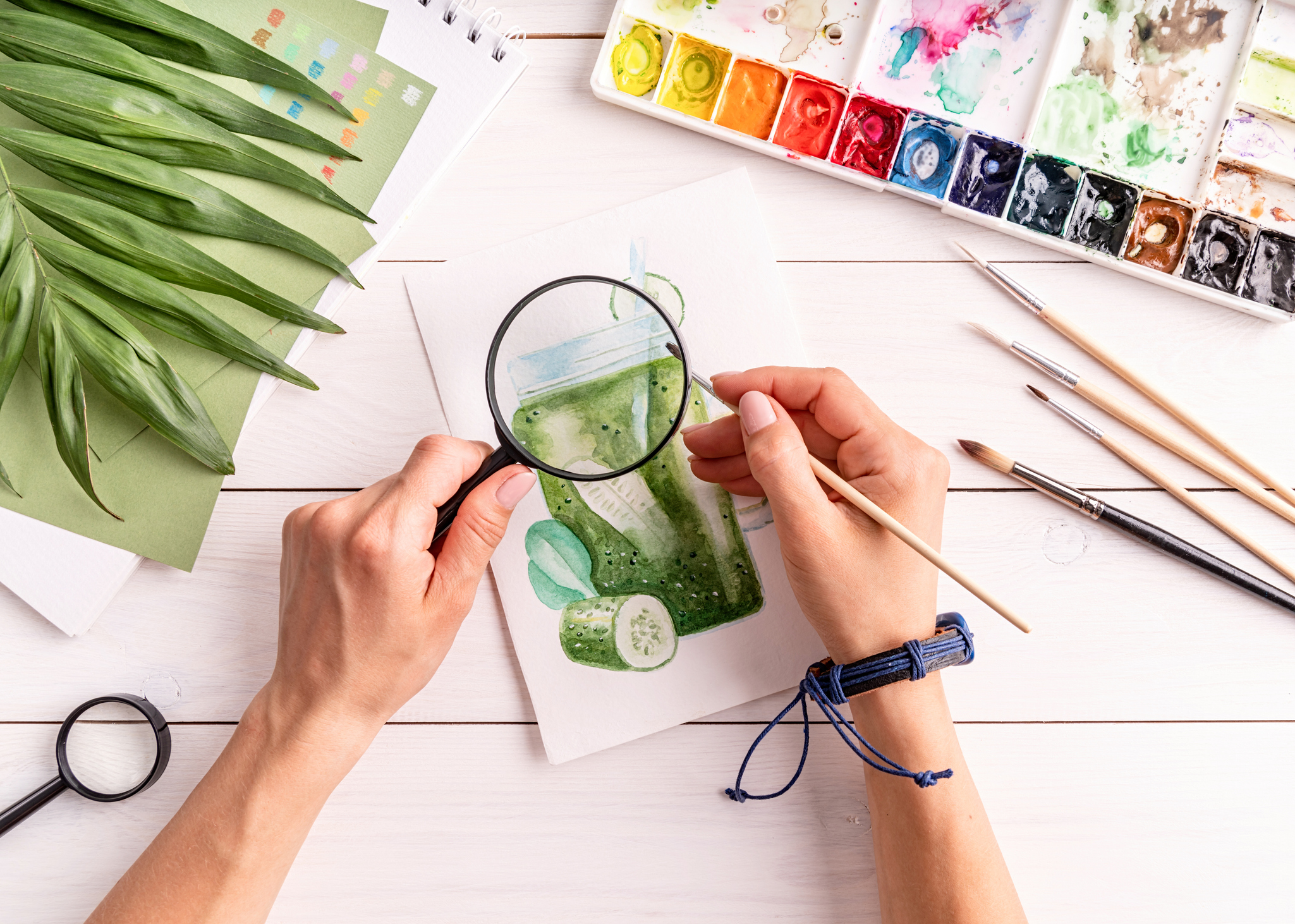
The session then moves into guided watercolor exploration. Participants will create a set of color swatches to observe how pigments change when diluted with water, layered, or placed next to one another. Using natural objects or reference images, you’ll practice mixing and matching colors from nature—leaves, bark, sky, stones, and shadows—learning how light alters each hue and value. Emphasis is placed on seeing subtle shifts rather than matching a single “correct” color.
No prior science or watercolor experience is required. This session encourages curiosity, experimentation, and close looking. Participants leave with practical tools for seeing light more clearly, mixing color more intentionally, and capturing the living qualities of light in both watercolor paintings and nature journals.
Topics Covered:
- Understand how light direction, quality, and color affect appearance
- Explore basic optics concepts relevant to seeing and painting
- Build a personal library of watercolor color swatches
- Apply color vision concepts to watercolor mixing and layering
- Practice mixing and matching colors directly from nature
- Develop confidence in interpreting, not copying, what they see